
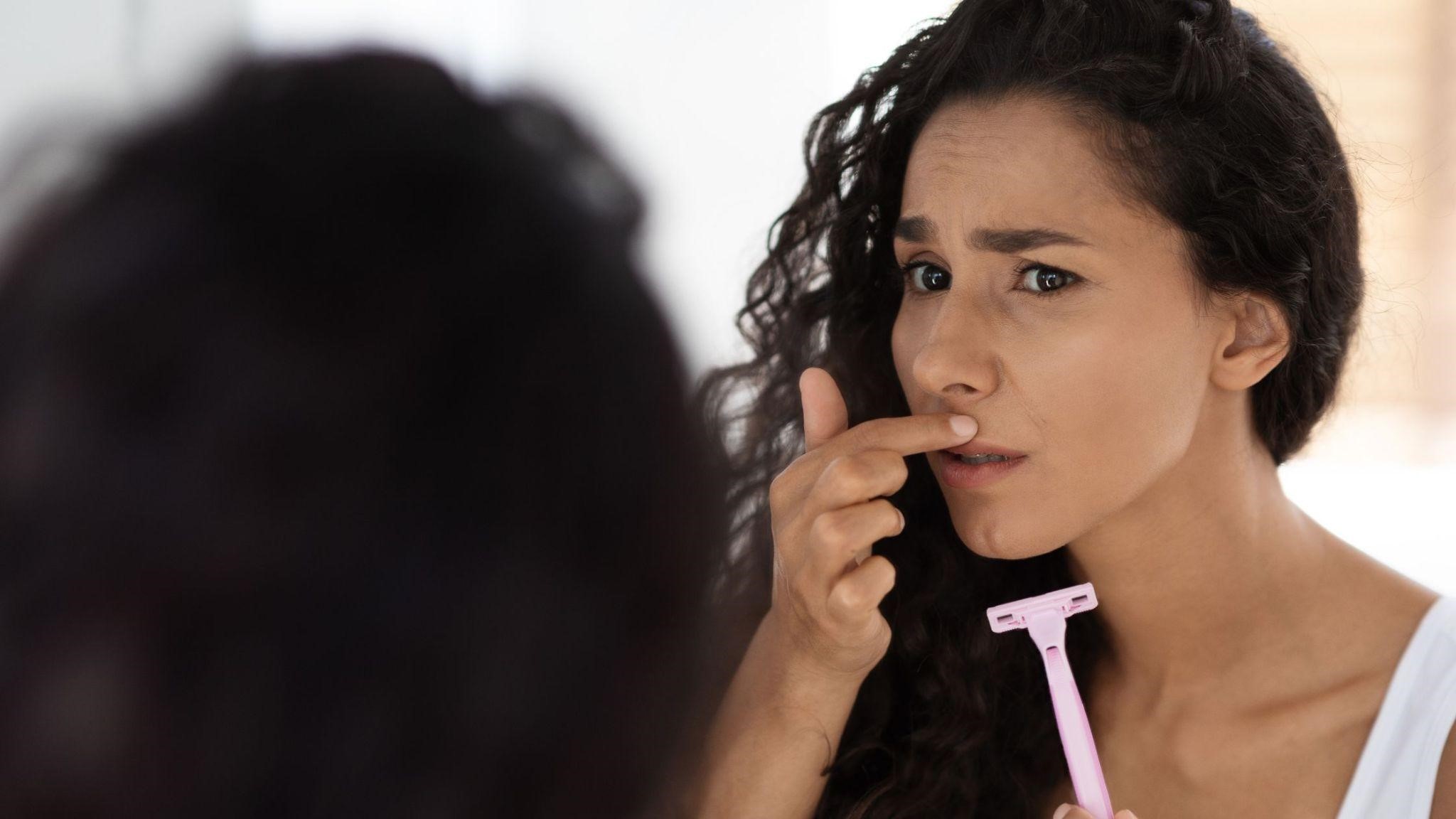
Quick answer: Excessive facial hair in women, known clinically as hirsutism, is something most women worry about. The good news is there are many treatments, ranging from a quick fix like threading and plucking to a genuinely permanent solution like electrolysis, which destroys the hair follicle rather than just reducing what grows back.
Laser is the other long-term option most people ask about, though it’s picky about hair and skin colour in a way electrolysis isn’t. If the growth showed up suddenly or came with other changes, mention it to your GP too. Sometimes it’s just genetics. Sometimes it’s worth a hormone check.
Jump to:
- Why This Happens in the First Place
- Your Actual Options, Ranked by Commitment Level
- What Electrolysis Actually Involves
- The Numbers Behind Facial Hair in Women
- Conclusion
- FAQs
Excessive Facial Hair In Women Is More Common Than You Might Think
It usually starts small. A stray dark hair on the chin you catch in a car mirror, or a friend’s phone camera catching your jawline at an angle you’d rather it hadn’t. You pluck it, you forget about it, then a few weeks later there’s another one, and this time it’s coarser than you think hair should be.
In my experience, almost nobody talks about it until they’re already three years deep into a private tweezing routine. I get why. It feels like a strange thing to bring up, even to a friend. But it’s a lot more common than the silence around it suggests, and there are proper, permanent options for dealing with it.
Why Does Excessive Facial Hair in Women Happen in the First Place?
The clinical term is hirsutism. It describes coarse, dark terminal hair growing somewhere it wouldn’t typically show up on a woman in any real quantity, most often the upper lip, chin, or jawline, occasionally the chest.
The usual driver is androgens, hormones every woman produces to some degree, just at different levels.
Polycystic ovary syndrome, or PCOS, tends to come up first in any conversation about causes, but it isn’t the only explanation. Genetics plays a role too, so do certain medications.
None of this is means there is always something wrong. It just means the follicles on your face are more responsive to hormone signals than average.
Your Actual Options, Ranked by Commitment Level
There isn’t a single best treatment here. It depends entirely on how much upkeep you’re willing to sign up for versus how much you want it gone for good.
If you want something quick with basically no commitment, tweezing and threading can get the job done for a couple of weeks at a time and cost almost nothing.
Waxing pulls from the root, so it buys you a bit more time between sessions than shaving would.
Depilatory creams dissolve hair at the surface but need repeating fairly often.
Then there’s the next level treatments people usually end up asking about once they’re tired of maintenance. This includes:
Laser hair removal:
Reduces regrowth over a course of sessions, though it performs best on dark hair against lighter skin and largely doesn’t work on white, grey, or red hair
Electrolysis:
Treats each follicle individually and is currently the only method recognised as capable of permanently destroying it, on any hair colour or skin tone
Laid out side by side, the practical differences look like this:
| Factor | Laser Hair Removal | Electrolysis |
| Works on all hair colours | No, struggles with white/grey/red hair | Yes |
| Works on all skin tones | Best suited to lighter skin | Yes |
| Result | Reduces regrowth, needs top-ups | Destroys the follicle, permanently |
| How it treats the area | Broad coverage, quicker per session | Follicle by follicle, more precise |
| Sessions required | Multiple, often ongoing | Multiple, but a finite course |
What Electrolysis Actually Involves
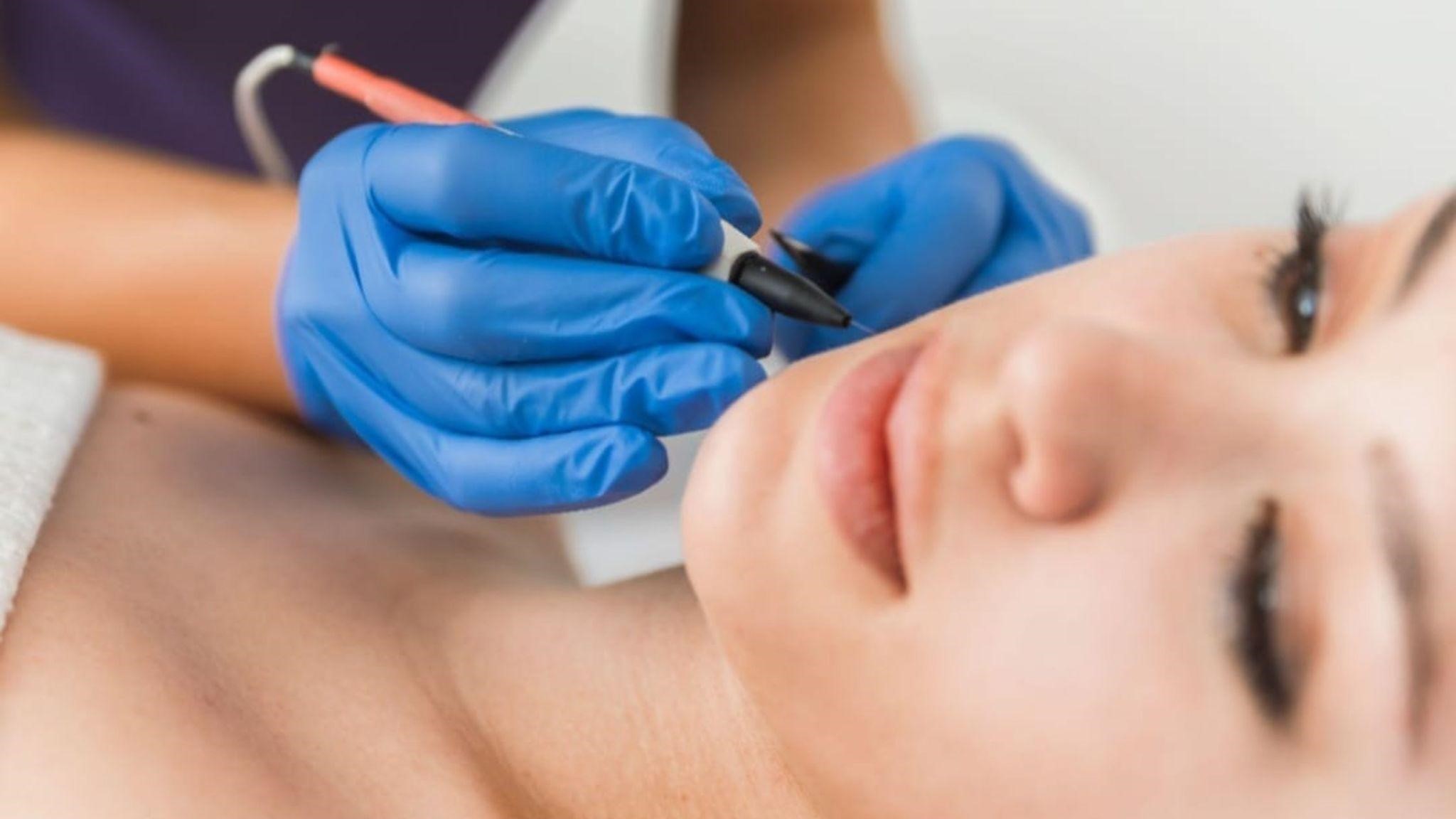
A fine, sterile probe is inserted into the individual hair follicle, and a small current, usually short-wave diathermy or a blend of galvanic and thermolysis, targets the cells responsible for hair growth so the follicle can’t produce hair again.
Electrolysis has been recognised in some form since the 1870s, which honestly makes it one of the oldest hair removal methods still in regular clinical use.
At A.H. Advanced Skin Specialist, an electrolysis clinic in Milton Keynes run by Alexandra Hall, our treatment uses Apilus computerised electrolysis machines, which deliver current fast enough per follicle to make the process noticeably quicker and more comfortable than older digital approaches.
Before any treatment starts, there’s a full consultation and a patch test, partly to understand your hair growth history, so nothing about the first real session comes as a surprise.
Because it’s progressive rather than one-and-done, most people need a series of appointments rather than a single visit, and the number depends on factors like how long the hair’s been growing and what removal methods you’ve tried before.
Conclusion
Excessive facial hair in women isn’t rare, isn’t shameful, and doesn’t have to mean tweezing in secret for years, as a lot of women end up doing before they book anything at all.
Quick fixes have their place when you just need something sorted before an event. However, if you actually want it gone rather than managed, electrolysis is still the only method proven to permanently destroy the follicle, whatever your hair or skin colour.
If you’re weighing up electrolysis hair removal options in Milton Keynes, A.H. Advanced Skin Specialist gives every client a proper consultation and a patch test before anything else happens, so you’re not going in blind.
As an electrolysis clinic Milton Keynes residents have relied on for years, get in touch with us and talk through what a realistic plan would look like for you specifically.
FAQs
What causes excessive facial hair in women?
Most often it comes down to androgens sitting at higher levels than usual, with PCOS being the most commonly identified cause. However, genetics and certain medications can play a part too.
Is electrolysis painful for facial hair removal?
Most people describe it as a brief hot scratch per follicle rather than anything severe, and modern computerised machines work quickly enough that sessions are generally manageable, with the pace adjusted to what you’re comfortable with.
How many electrolysis sessions will I need for permanent facial hair removal?
There’s no fixed number since it’s a progressive treatment, and it depends on things like how long the hair’s been growing and what removal methods you’ve used in the past, which is exactly what the initial consultation figures out.
Is electrolysis better than laser hair removal for facial hair?
For permanence, yes. Electrolysis destroys the follicle rather than just slowing regrowth, and unlike laser treatment, it works regardless of hair or skin colour.